
Retina and Macula Care: Protecting the Center of Your Vision
The retina is a light-sensitive tissue layer located at the back of the eye. At its center is the macula, a small area responsible for the sharp, detailed vision that allows us to read, recognize faces, and drive. Due to its delicate nature, any alteration in these structures requires a thorough evaluation by a retina subspecialist.
Common Retinal Conditions Various situations can compromise the integrity of retinal tissue. The ophthalmologist evaluates these cases individually, as symptoms can range from the appearance of “floaters” to a distortion in straight lines (metamorphopsia). Some conditions that require monitoring include:
Diabetic Retinopathy: A complication of diabetes that affects the blood vessels of the retina. Metabolic control and regular eye exams are the basis of prevention.
Age-related Macular Degeneration (AMD): A condition that gradually deteriorates central vision.
Retinal Detachment: A critical situation where the tissue separates from its normal position, requiring immediate medical attention.
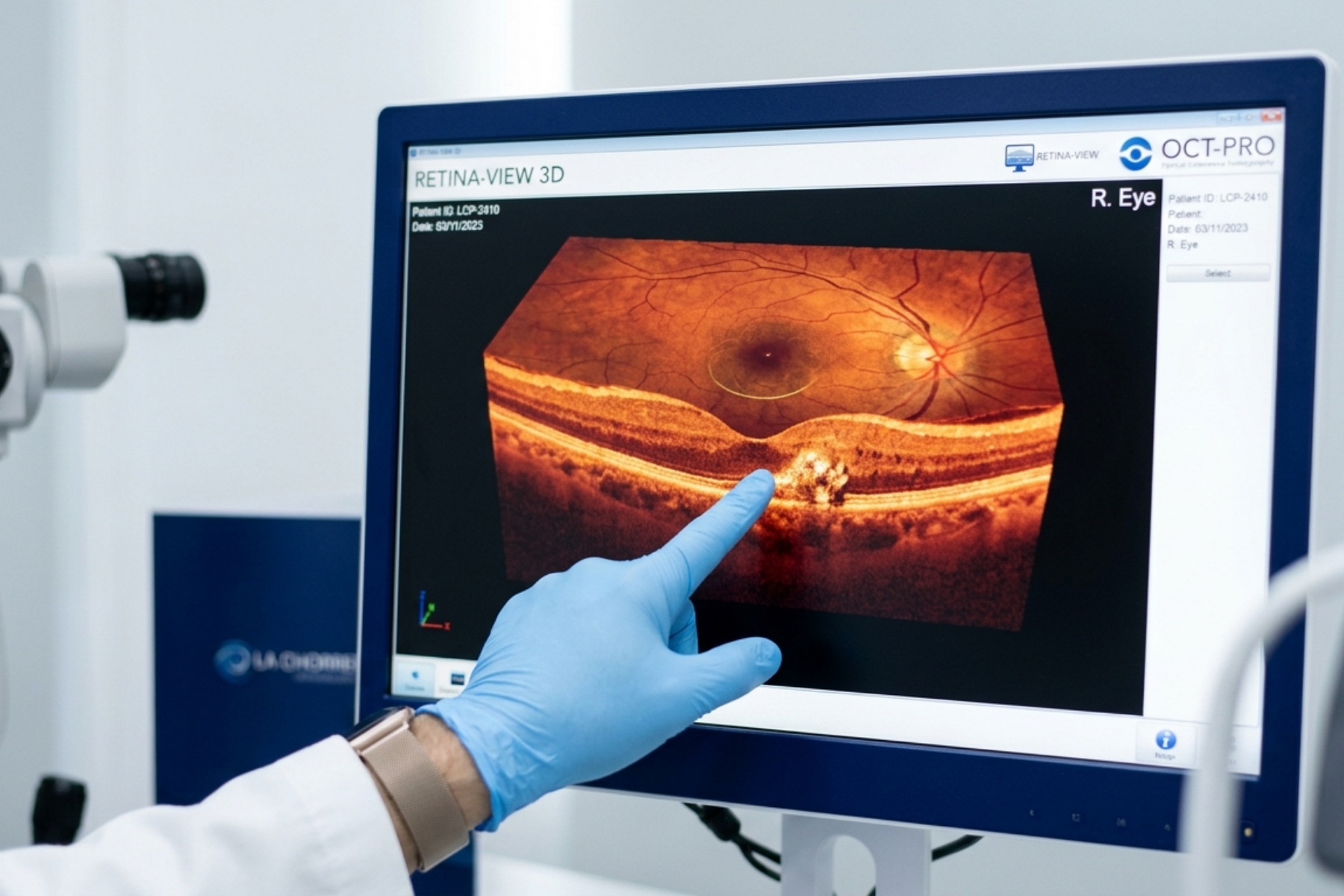
The Specialized Diagnostic Process It is essential to understand that a conventional eye exam is not always sufficient to evaluate the periphery of the retina or the deep layers of the macula. At Boyd Clinic, the specialist uses imaging methods that allow for the observation of cross-sections of the tissue with micrometric precision.
Studies such as Optical Coherence Tomography (OCT) or angiography allow the doctor to visualize if there is fluid accumulation, bleeding, or traction in the tissue. Based on these findings, the professional will determine if the patient needs observation, the application of intravitreal medications, or specific laser procedures.
The Importance of the Retinologist’s Judgment There is no single protocol for retinal diseases. The treatment that works for diabetic macular edema may not be appropriate for dry macular degeneration. The therapeutic decision is based on the stage of the disease, current visual acuity, and the individual eye’s response to treatment.
Retina care is, in many cases, a long-term management. Maintaining open communication with your specialist and attending scheduled check-ups is the most effective strategy to preserve vision and detect any changes before they become irreversible.
Have you noticed distortion in straight lines or spots in your visual field? Retinal conditions typically do not cause pain, so visual symptoms are the first warning sign. Schedule an evaluation with our specialists for a comprehensive diagnosis of your retinal health.